



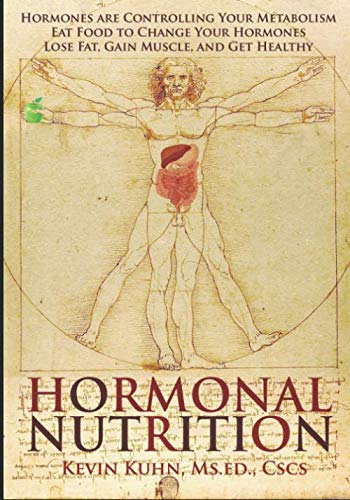
Hormonal Nutrition

 4.0 (92 items)
 Limited Time Sale
US$12.41 cheaper than the new price!!
Free cash-on-delivery fees for purchases over $99
Product details
| Management number | 233471713 | Release Date | 2026/06/27 | List Price | US$8.27 | Model Number | 233471713 | ||
|---|---|---|---|---|---|---|---|---|---|
| Category | |||||||||
When you put something into your digestive system, it is NOT only the energy value of that type of food that decides how your body will use it. The amount of energy needed to digest protein, carbohydrates, and fats is not equal, and the hormones required to breakdown, use, or store protein, carbohydrates, and fats are all different. Yet it seems that currently we are told that Calories are the ONLY thing that matters, or that Calories do not matter at all! The truth is rarely at the extremes and is almost always somewhere in the middle. While it is true that too many calories cause weight gain, and reducing calories reduces weight, the complexity of what that weight is made of is rarely explained. If all we did in life were sit in a chair and eat only one kind of food, the previous "equations" might be fine, but no one can do that! Different types of food affect your metabolism differently. This is because your hormones dictate how your body uses food, and various foods dictate which hormones can do their job. The Standard American Diet results in specific hormones being produced to such a great extent that opposing hormones that are needed to maintain metabolic balance are unable to be produced so that they can do their job. A diet without any Calorie and macronutrient tracking or intuitive awareness of what/how much you need results in an unbalanced metabolism and takes YOU out of the driver seat. You can be a passenger with no say in where you and your body are going, or you can take back the wheel and decide for yourself where your metabolism is headed.The issue of obesity and weight management is much, much more complex than just ingesting too many calories and not expending enough calories. The days of eating less than normal while exercising more than normal should be on the decline, but they don't seem to be. The fact of the matter is that this approach does not work for many people because it does not prioritize fat-loss, only weight-loss. If it were this simple, then why are fat-loss and muscle-gain so difficult? Part of the problem comes from where we get our information. Across the board, there seems to be no consensus on what works. High-carb/low-fat? High-fat/low-carb? Keto? Carnivore? The list is virtually endless. I wrote this book, not to defend a specific diet type, but to see what science and research explicitly says about how our food choices affect our hormones, because it is our hormones that are running things. When it comes down to it, the presence, or absence, or specific hormones have significant influence over how our body processes food, and the food we eat dictates how we produce hormones. The nutrition standard we have right now prevents the optimal production and function of specific hormones, and thus causes not only weight gain (and all the diseases and conditions associated), but also prevents gains in muscle mass. So I propose a paradigm shift. Not everyone needs to track Calories and macros, and not everyone who tracks Calories and macros needs to track all the time. If we shift the focus from "I have to track calories," to "I need to eat food 'x' because it will have a specific effect on the production or role of hormone 'y,'" we can lose fat, increase muscle, and improve our health.So what hormones will we be discussing? Well, there are very many, but this book will cover 12 specific hormones involved in metabolism. These hormones are insulin, adiponectin, leptin, ghrelin, glucagon, CCK, PYY, GLP-1, cortisol, testosterone, growth hormone, and IGF-1. We will cover the specific role that these hormones have concerning metabolism. We will also include the role that specific food types (Protein, Carbs, and Fat), dietary supplements, lifestyle factors, and behaviors have on the production of these hormones, and how that affects your metabolism. Finally, I'll explain how to put everything together into a plan of action so you can improve your health, lose fat, and gain muscle. Read more
| ISBN10 | 1657097463 |
|---|---|
| ISBN13 | 978-1657097469 |
| Language | English |
| Publisher | Independently published |
| Dimensions | 7 x 0.26 x 10 inches |
| Item Weight | 9.9 ounces |
| Print length | 113 pages |
| Publication date | January 12, 2020 |
Bestseller ranking
Indian




Customers who viewed this product also viewed
Slides


Correction of product information
If you notice any omissions or errors in the product information on this page, please use the correction request form below.
Correction Request Form